Patterns & Growth Mini Journal
Notice familiar responses, reflect on what matters, and choose one manageable next step.
Download PDF ↓Explore free printable tools for self-reflection, emotional regulation, focus, relationships, and family well-being. Browse by topic and download whatever fits today.
Download printable PDFs from the collections below. Resources are educational and do not replace individualized care.
A few pages can help you notice a pattern and decide what comes next.
Notice familiar responses, reflect on what matters, and choose one manageable next step.
Download PDF ↓Clarify a goal, choose a realistic action, plan for obstacles, and create a seven-day reboot.
Download PDF ↓A variety of practical ways to care for your body, mind, routines, and relationships.
Download PDF ↓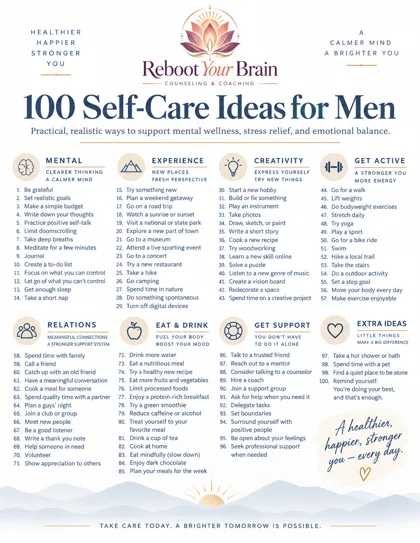
A quick visual list of self-care options across everyday life, activity, creativity, and connection.
Download PDF ↓Small exercises for coming back to the present.
Try brief grounding, breathing, and body-awareness prompts to manage everyday stress.
Download PDF ↓Organize your thoughts and decide what you would like to discuss in your next session.
Download PDF ↓Try brief, desk-friendly strategies for managing anxious thoughts while staying engaged.
Download PDF ↓Breathing, movement, muscle relaxation, and other physical coping approaches.
Download PDF ↓Sensory grounding, muscle relaxation, mindful observation, and calming prompts for adults.
Download PDF ↓Color hunts, music, grounding objects, and other accessible activities for teens.
Download PDF ↓A compassionate collection of grounding, sensory, and body-based exercises for difficult moments.
Download PDF ↓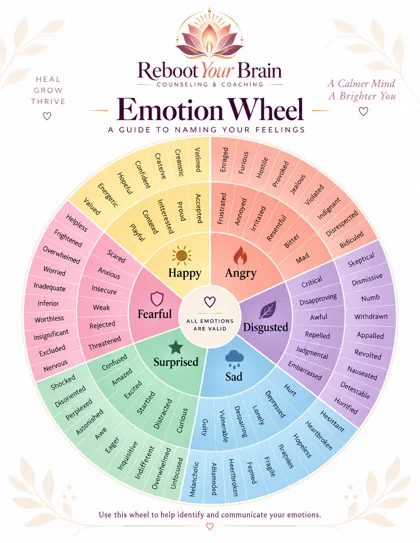
Find more precise words for emotions and notice the feelings underneath your first reaction.
Download PDF ↓Tools to clarify what you need and practice saying it.
Reflect on your boundaries and draft language for communicating and following through.
Download PDF ↓Recognize boundary signals, identify needs, and practice communicating personal limits.
Download PDF ↓Map levels of trust, closeness, and emotional access in your friendships and reflect on boundaries.
Download PDF ↓Caregiver-led ideas for practicing feelings, movement, and connection.
Use simple activities to name feelings, practice calming skills, and start family conversations.
Download PDF ↓Gentle, yoga-inspired movement and breathing prompts for children and their caregivers.
Download PDF ↓Five playful sensory, movement, and breathing exercises to use with children.
Download PDF ↓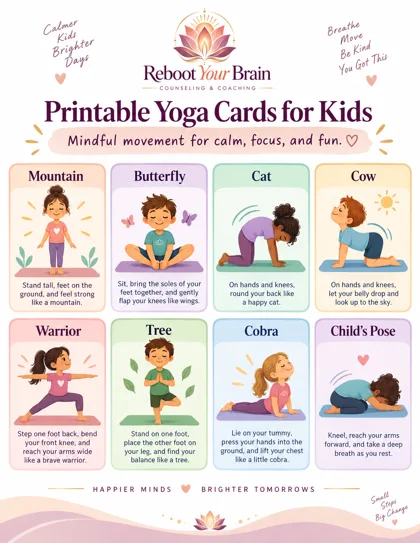
An original Reboot Your Brain movement poster, paired with simple caregiver instructions and adaptable poses.
Download PDF ↓Resources for navigating conflict, rebuilding connection, and improving everyday communication.
A pause-and-return guide for two people who want to understand a disagreement without treating one person as the problem.
Download PDF ↓A simple structure for expressing a concern clearly without turning it into a character judgment.
Download PDF ↓Small, sincere acknowledgments can help couples notice what is working, not only what needs repair.
Download PDF ↓A structured conversation for practicing curiosity and understanding before advice.
Download PDF ↓A short preparation worksheet for deciding how, when, and why to start a sensitive conversation.
Download PDF ↓Use curiosity, concise reflections, and gentle check-ins to support understanding in everyday conversations.
Download PDF ↓A gentle planning sheet for building connection that fits real schedules and energy levels.
Download PDF ↓Practical supports for attention, daily routines, and darker seasons.
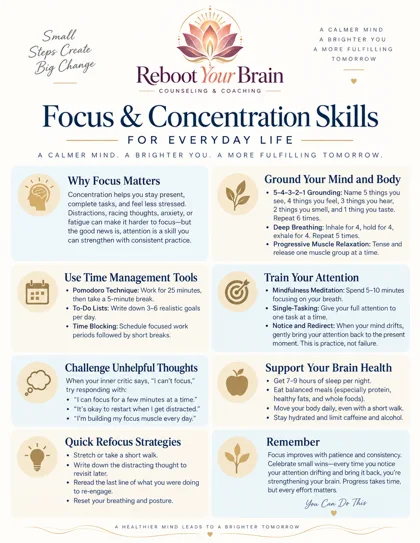
Grounding, task planning, attention practice, and gentle refocusing tools for everyday life.
Download PDF ↓Accessible winter self-care ideas for routines, movement, connection, and daylight.
Download PDF ↓Explore our print journals in the Shop, including the Dreams & Nightmares flip journal and the upcoming Nighttime Thought Release Journal.
These original Reboot Your Brain resources support education and self-reflection; they do not replace individualized mental health care. Children’s movement activities require appropriate adult supervision and should be adapted or skipped if uncomfortable.